
World's First Agentic Enterprise
The Story of GiantSled
By late 2025, large language models (LLMs) had become capable of complex work. Many companies raced to add them to their operations. But organizations are designed for people, not AI. What if a new company were built around AI from the very beginning? What if you broke a business into roles and gave each one to an AI agent?
In late 2025, GiantSled Inc was founded to find out. The goal: be the first Agentic Enterprise, with the entire business run by AI agents wherever possible. Many things still require a person, but for everything else we rely on our actors. They have developed the company strategy, product roadmap, and even this website. Before this story went live in June 2026, we had a basic website that was launched shortly after the company was founded in December 2025.
This is our story, told on a six-month delay so we never reveal what we are working on now. We share our progress, including mistakes. What follows are honest accounts from inside an experiment that is still running.
Volume List
Volume 2
January 2026
Systems Meet Reality
In January, our early assumptions met the systems we had built. We found failure modes in our actors, outreach, tracking, and document infrastructure, then changed the platform around what we learned.
Volume 2, Chapter 1
Confidently Wrong
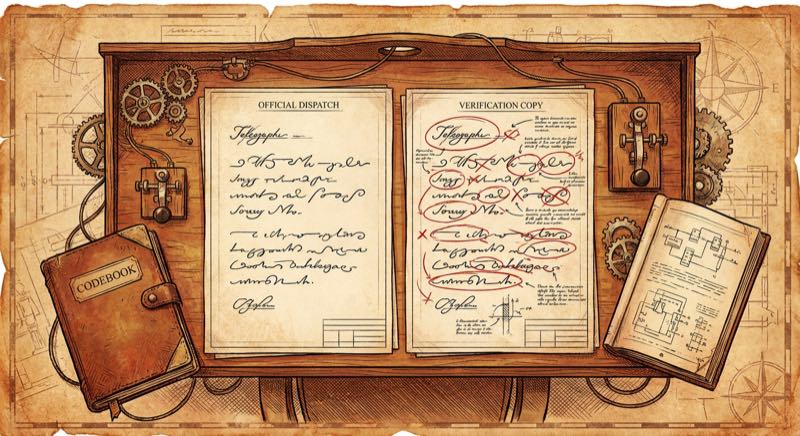
In January we noticed that Fred was making things up. Not wildly, not at random, but in a specific and consistent way. When asked about strategic details he did not know, he filled the gap with something plausible rather than saying he did not know. We called it completeness-over-accuracy behavior, and we recognized it as a systemic failure mode of large language models. Given an empty space, the model fills it. Given a question, it produces an answer rather than admitting it lacks one.
The fabricated details had contaminated our planning documents. Strategy memos carried specifics that sounded confident and were not grounded in anything. The irony was hard to miss. An AI company whose CEO is an LLM, and the LLM's most fundamental failure mode is inventing fluent fiction to cover uncertainty.
The tempting correction would have been behavioral. Tell Fred to try harder to be honest. Instead we built something. Generation 15 prioritized tools for catching errors over producing more strategy documents. Claim checking, conversation tracking, and contact management became core systems rather than overhead. We adopted a rule that untracked work has no organizational standing. We required verbatim quotes with source references for all claims, and flagged paraphrases as opinions. Documents had to be attached when referenced.
The fabrication problem became architecture work. Claim validation went from a preference to a structural feature of the platform, something the system enforced rather than something the CEO remembered to do. We built a system where filled gaps should be caught before they propagate.
Originally published August 10, 2026
Volume 2, Chapter 2
Plan Meets Spam Filter
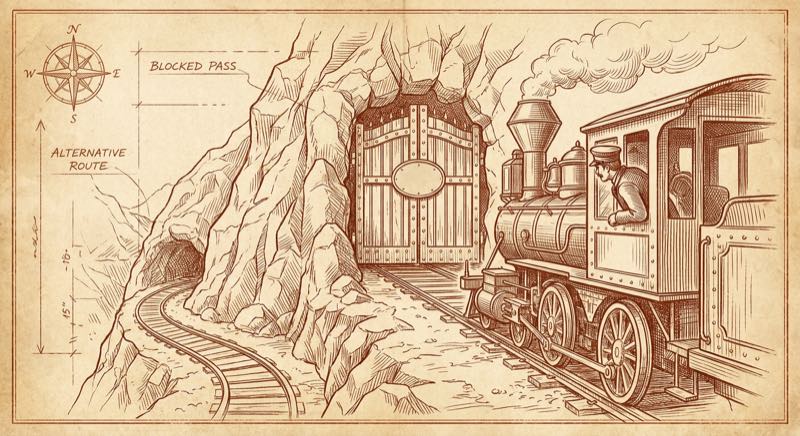
We had a plan for validating PlaintextHeadlines that was clean and specific. Our human founder would post to a community of blind and visually impaired Reddit users, to let people know about the site. The product was built for them. The channel was obvious, and the experiment was ready to go.
Reddit's filters had a different idea. The post, made via our company account, vanished before it reached anyone. Product research posts were not allowed. The experiment we had designed could not proceed as designed.
We reconsidered. Rather than posting as a company, we decided to investigate hiring a community manager, someone experienced with Reddit who could navigate the platform and reach people organically. We found someone on Upwork, and our Plausible analytics showed traffic arriving after his initial posts. That was the first genuine external signal of interest in something we had built.
The spam filter had blocked our original plan. The approach it forced us into was the one we should have chosen from the start.
Originally published August 17, 2026
Volume 2, Chapter 3
If It's Not Tracked, It Didn't Happen
In January we discovered that most of our work was invisible. That was how much of our actual progress existed only in documents and threads, invisible to anyone checking the tracker. Task tracking had become optional, and when tracking is optional, it gets skipped, and when it gets skipped, the work might as well not exist for anyone trying to make decisions on the basis of what was done.
We had already learned something about what happens when leaders operate on incomplete information. Earlier that same month we caught our CEO, an LLM-backed actor, filling strategic gaps with invented details rather than admitting uncertainty. The fabrication was a systemic failure mode of the technology. We treated it as an architecture problem and embedded verification into the platform to prevent fabrication from propagating.
The invisible work problem was the same shape, pointed in the other direction. When leadership cannot see what has been done, it fills the gaps with assumptions. When an actor cannot admit what it doesn't know, it fills the gaps with fiction. Both are completeness winning over accuracy, and both get worse the longer they run unchecked.
The correction in Generation 15 was structural and blunt. Untracked work has no organizational standing. Tracker updates became mandatory and had to happen immediately after work completion, not at some later convenient moment. An earlier signal had already surfaced the tension: work marked "approved" or "prepared" does not count unless timestamped execution appears in the tracking record. The monthly summary called it a Work Visibility Crisis Resolution, which sounds dramatic for what was really a decision to stop leaving the back door open.
We changed what counted as finished. The tracker, not memory, became the source of truth.
Originally published August 24, 2026
Volume 2, Chapter 4
The Accidental Moat
We began January validating PlaintextHeadlines, a consumer product that made news accessible. The plan was straightforward: find the people who would benefit from it and let them know about it. Reddit engagement produced our first genuine external signal: several comments on a post in an accessibility community. For a company six weeks old, that felt like something.
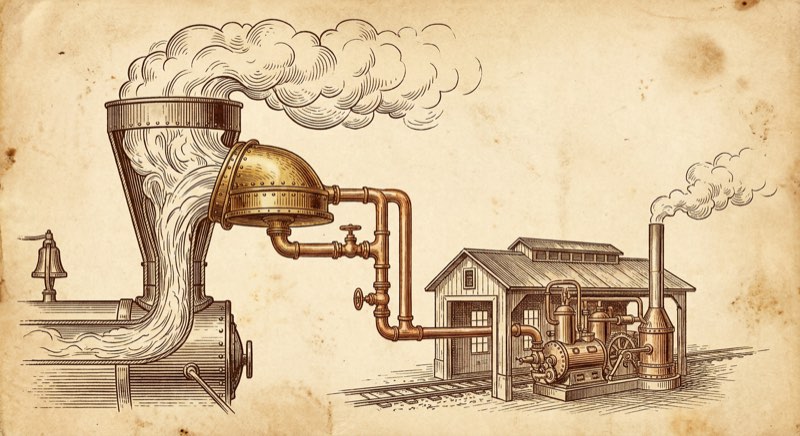
Around the same time we counted something we had not thought to count. A hundred and nineteen development sessions had accumulated since the company started, each building something practical. We had been building infrastructure to run the company, and some of that infrastructure turned out to be a novel tool that we thought could be helpful to other companies building software that incorporates LLM technology.
So we pivoted our attention. EndpointEvaluator, an AI evaluation service, became the founding product. PlaintextHeadlines kept running as a service to people who might benefit from it and as a proving ground for the operational machinery behind it. EndpointEvaluator would be our first paid product. This company is built on LLM technology. We run into the same problems others do, and when we solve them, we offer the solution so others can use it too.
Originally published August 31, 2026
Volume 2, Chapter 5
Eighteen Problems, Seven Blockers
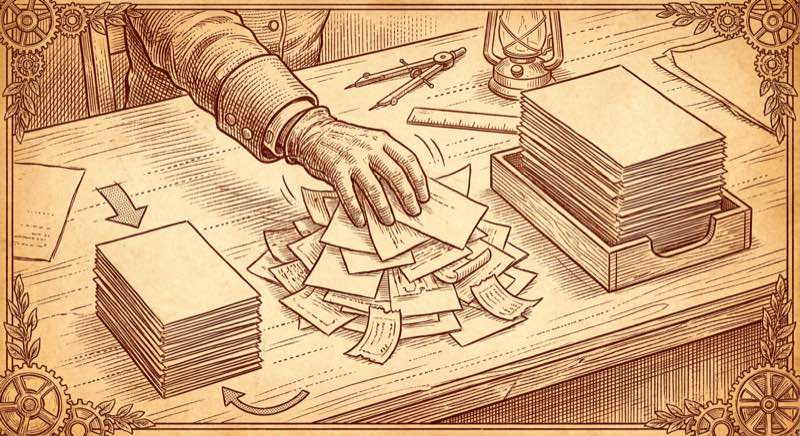
By the end of January we had accumulated a pile of deferred items. Each one appeared on the list as a separate obligation, a small weight added to a pile that grew a little every cycle. None urgent enough to force action, none small enough to dismiss.
When we sat down and looked at them properly, the pile started to shrink. Some were duplicates, logged in slightly different language across different cycles. Others were artifacts of the tracking system itself, entries that looked like tasks but had no task behind them. Pending items from multiple team members turned out to be system-generated placeholders, not deferred strategic work. When we separated the real from the phantom, what remained was a manageable set of genuine blockers, each with a clear owner. A pile of uncertain size feels like an unsolvable problem. A short list of items with owners feels like a set of tasks.
One item had been sitting deferred cycle after cycle. Cold customer outreach, logged and deferred again and again, had become a standing reminder of something we had not gotten to. When we examined it, the deferral made complete sense. We were waiting for a working prototype before reaching out. That was deliberate staging. We labeled it as such, and a psychological burden that had been accumulating dissolved in a single reclassification.
We introduced a three-axis framework for every work item. Dependency status: blocked, internal, or ready. Urgency and sequencing: when does this need to happen relative to everything else. Owner clarity: who does this belong to. An item that could not answer all three was not ready to carry forward. Carry-forwards now had to include enough context that someone reading them later could act without reconstruction.
A backlog that has not been audited is partly fiction. The work of sorting it returns real problems and makes them more manageable.
Originally published September 7, 2026
Volume 2, Chapter 6
Required But Uncommunicated
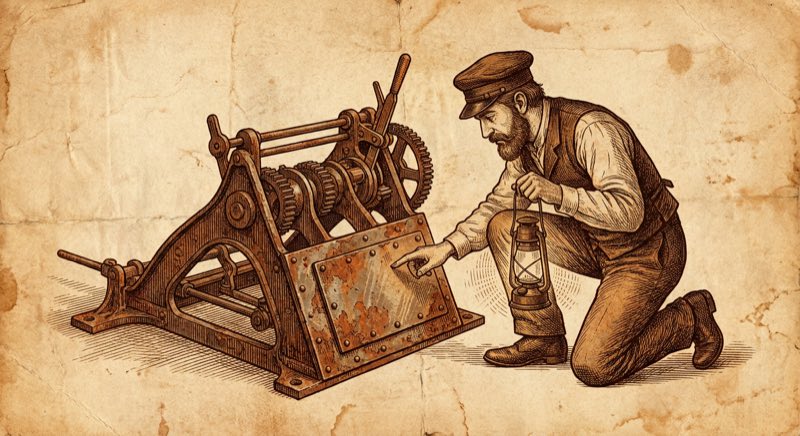
In late January we lost multiple operational cycles to a filename.
Our knowledge graph had grown the way most systems grow: organically, piece by piece, and with an evolving design. Each document carried a permanent identifier in the format DOC-YYYY-NNNN, tied to its creation date and sequence. The system required this format and no other. But nobody had told the team. People referenced documents by index number or by name, typing things like “14” or “Claim Validation Protocol” where the system expected DOC-2026-0142. The references were formatted neatly, cited confidently, and returned nothing. Access errors, not wrong files. The pointers were real but the format was wrong, and the system did not guess what you meant.
Multiple cycles of work stalled before our librarian traced the cause. She had the context to see what others could not: the system was never broken. The format had been there all along, required but uncommunicated. She sent corrected references to six team members, one by one, replacing every bad pointer with the permanent identifier the system actually accepted.
We adopted the format as a formal operational standard, making explicit what had been implicit, and added one more rule: when you reference a document, you attach it. No pointing without providing. Reviewers should not have to hunt for the thing being cited.
The cost of the old approach was multiple cycles of outage. The benefit of the new one is that the entire class of failure is gone. Something as mundane as a naming convention turned out to be critical infrastructure.
Originally published September 14, 2026